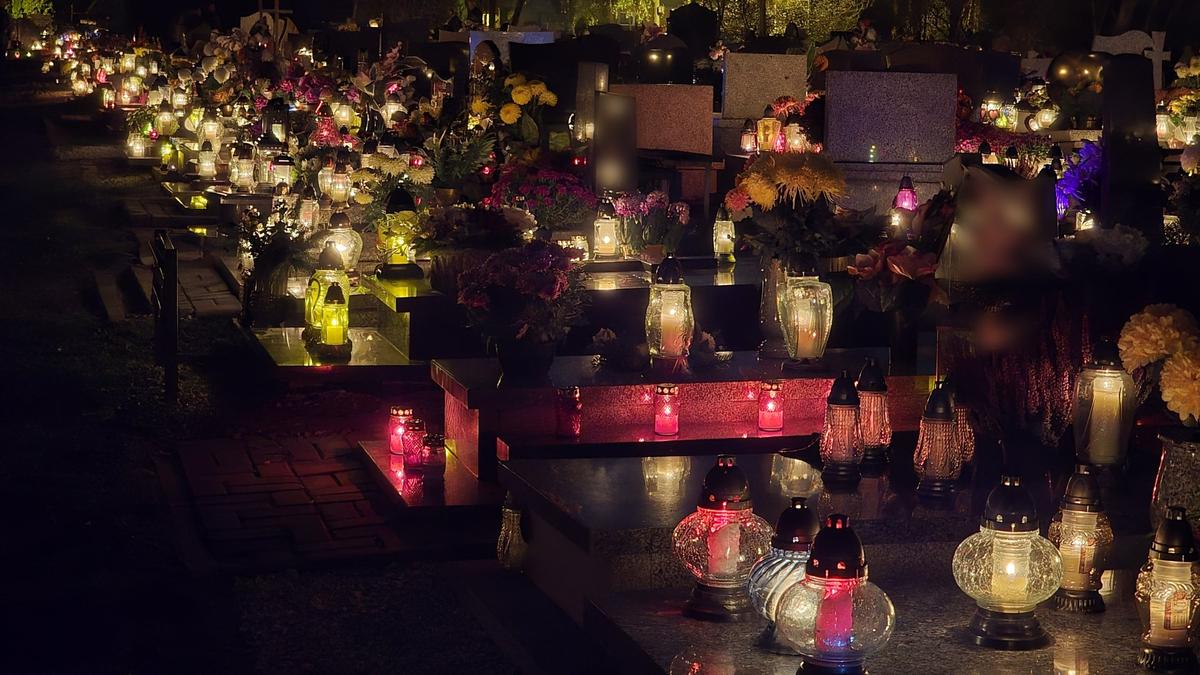
All Saints Day with children in Luxembourg
My grandmother is no longer with us, and at this time of year I think of her even more.
She never liked Halloween.
In Luxembourg, France, Germany and much of Europe, the Halloween we know today only spread from around the 1990s. For my grandmother it was new, and she did not understand why people were partying and celebrating. For her, All Saints Day was a time to be quiet and to think of the loved ones we have lost.
Right now, everything is about the party: the costumes, the sweets, the pumpkins. I love a good costume as much as anyone. But I also believe our children should know what comes the day after.
The party and the quiet day
Halloween is actually named after All Saints. It comes from “All Hallows’ Eve”, the evening before.
The ghosts are old. In Ireland and Scotland, people once believed the spirits of the dead came close at this time of year, and they wore masks to protect themselves. Irish and Scottish emigrants took these customs to North America in the 1800s. The blood and horror are much newer, and they came mostly from American films. So when my grandmother looked at the fake blood and the skeletons, she was seeing something very far from the days she knew.
Today, 31 October is about costumes, sweets and being a little bit scared for fun. 1 November is something else.
Allerhellegen in Luxembourg
All Saints Day, Allerhellegen in Luxembourgish, is a public holiday here. Families go to the cemetery to remember the people they have lost, and they bring candles, flowers and wreaths. There is a religious ceremony with a blessing of the graves, and many families then have lunch and spend the day together. The next day, 2 November, is Allerséilen, All Souls’ Day.
The Trauliicht, Luxembourg’s own lantern
If you moved here from somewhere else, this one may be new to you. Luxembourg has its own old custom around All Saints, and it is a lovely one to share with children.
A Trauliicht is a lantern made from a hollowed-out fodder beet, with a scary face carved into it and a candle inside. During the nights around All Saints, the lanterns are placed on doorsteps, on windowsills and along the village streets. The Luxembourg writer Dicks already mentions one in 1855.
The lanterns were meant to chase away bad spirits. People connected these spirits with will-o’-the-wisps, the strange lights seen over the meadows, and believed the cattle could bring them home from the summer pastures. Lanterns were hung on both sides of the stable door. A cow that walked between them, the saying went, would not fall ill.
The custom is strongest in the north of the country. It faded from the 1970s, when farmers switched to maize and fewer fodder beets were grown. Then something funny happened: the popularity of Halloween probably helped bring it back. Today many communes, museums and parents’ associations keep it alive, and children do the carving. In Munshausen, lanterns are even carried through the village at night by torchlight. In 2023, the national heritage commission gave its unanimous support to adding the Trauliicht to Luxembourg’s list of intangible cultural heritage.
So the Trauliicht sits right between the two days. It has the scary face of Halloween, but it belongs to All Saints.
Want to carve one? The Trauliicht weeks at Robbesscheier in Munshausen run until 4 November this year, and booking is required. You will find other lantern events on our events page. You can also simply try it at home with a big beet or a turnip.
Not everyone keeps these days apart
In Mexico, Día de Muertos is exactly the opposite of the quiet day my grandmother knew. On 1 and 2 November, families build small altars with photos, candles, marigolds and the favourite food of the person who died. There is music, dancing and stories. It is a celebration, and the people they have lost are at the centre of it.
Portugal has its own version for children, and many families here will know it. On the morning of 1 November, in Pão-por-Deus, children go from door to door and receive small treats like biscuits, fruit and nuts. There are no costumes and no masks.
Where I come from, we separate the two. Halloween is the party. All Saints is the candle, the flowers and the silence.
I do not think either way is wrong. Children can dress up one evening and light a candle the next day. What matters is that they know why.
Why children should be part of it
Death is not something we can keep from our children. They notice when an adult is sad, and they ask questions. A day set aside for remembering gives them a gentle, normal way into a difficult subject, long before they need it.
How to talk about it
Grief specialists agree on one thing: use clear words. We adults say we “lost” someone or that they “went to sleep”, but small children take words literally. They may wait for the person to wake up, or become afraid of going to sleep themselves. So be clear that the person’s body has stopped working.
- Ages 3 to 5: Use short, simple, true sentences. “Grandma is not here on earth with us anymore. Her body stopped working, but she is in heaven, up on the clouds. We can still love her and remember her.”
- Ages 6 to 9: Answer their questions honestly. “I don’t know” is a perfectly good answer. Tell them it is okay to feel sad, and okay to laugh at a funny memory too.
- Ages 10 and up: Let them choose how they want to take part, and share your own memories with them.
At every age, make sure they know that nothing they said or did caused the death.
Small ways to remember together
- Let your child carry the candle or the flowers at the cemetery.
- Draw a picture or write a letter to leave on the grave.
- Look at photos and tell one story about that person.
- Light a candle in the window at home if the grave is far away. Many of us have family in another country.
- Make a memory box with small things that belonged to them.
- Remember pets too. For many children, that is the first loss.
Books that can help
- The Invisible String by Patrice Karst
- The Memory Box by Joanna Rowland
- Lifetimes by Bryan Mellonie and Robert Ingpen
- Au revoir Blaireau by Susan Varley (in French)
- Ente, Tod und Tulpe by Wolf Erlbruch (in German)
If your child is grieving right now
Some children need more than a candle and a story. In Luxembourg, Omega 90 offers consultations and therapy for grieving children and teenagers, as well as Reebou, a grief group for children. You can reach them on +352 26 00 37-1.
A candle for my grandparents
So let them dress up on the 31st. And on the 1st, light a candle together and tell them about someone you miss.
I will be lighting candles for my grandparents.